
If this is your first trip to Sapporo, three days is just about right.
With one day, your trip will probably be something like, “I saw Sapporo Station and Odori, ate dinner in Susukino, and that was it!” Two days gives you time for the main sights. With three, you finally have room to shape the trip around what you like – whether that means nature, Otaru, or simply more good food.
But first, let me warn you about a classic Hokkaido travel trap. Do not try to squeeze Sapporo, Asahikawa, Furano, Noboribetsu, and everything else into three days. Technically, can it be done? Sure. But you will travel, take a photo, travel again, travel some more, then collapse in your hotel. Hokkaido is not a stamp rally.
For a first visit, make Sapporo the main event. If you add a day trip, keep it as manageable as Otaru. That way, you still have time to eat what you came for, wander into a place that catches your eye, and stop when you find yourself thinking, “Oh, this is nice.”
Treat this three-day Sapporo itinerary as a flexible framework. Adjust it for the weather, your arrival time, and the size of your stomach. As Local Ren, I would honestly rather you use it that loosely.
| Day | Theme | Main areas |
|---|---|---|
| Day 1 | Walk through central Sapporo | Sapporo Station, Clock Tower, Odori, Nijo Market, Tanukikoji, Susukino |
| Day 2 | Nature and local Sapporo | Maruyama, Hokkaido Shrine, Mt. Moiwa |
| Day 3 | Go deeper into your interests | Food, beer, nature, onsen, or Otaru |
- Is 3 Days Enough in Sapporo?
- Day 1: Arrive in Sapporo and Explore the City Center
- New Chitose Airport to Sapporo Station
- Full Route – If You Reach Sapporo in the Morning or Before Lunch
- Short Route – If You Reach Sapporo Station After 3:00 p.m.
- Morning: Sapporo Clock Tower
- Late Morning: Odori Park
- Lunch: Nijo Market
- Afternoon: Tanukikoji Shopping Street
- Evening: Susukino and Sapporo Food
- Day 2: See Sapporo’s Nature and Local Side
- Day 3: Choose Your Sapporo
- What About a Day Trip to Otaru?
- Where Should You Stay for a 3-Day Sapporo Trip?
- Getting Around Sapporo
- My 3-Day Sapporo Itinerary at a Glance
- A Few Local Tips Before You Go
- Final Thoughts: Is Sapporo Worth 3 Days?
Is 3 Days Enough in Sapporo?
Sapporo’s central walking areas – Sapporo Station, Odori, and Susukino – are clustered fairly close together, so the city center is easy to explore on foot. There is also an underground walkway all the way from Sapporo Station to Susukino, which makes getting around much easier in winter. When I go to Odori or Susukino, I use it all the time on snowy days and during the summer heat.
Places farther out in the city are still reachable by subway, streetcar, or bus, so there is no need to rent a car the moment you arrive on your first trip.
Sapporo’s municipal subway also accepts contactless payments by credit card and other supported devices, with a daily fare cap. If you hate fumbling around for a paper ticket, it is genuinely convenient.
Day 1: Arrive in Sapporo and Explore the City Center
Day 1 is about walking south from Sapporo Station and getting a feel for the layout of central Sapporo. Build the route around the time you actually reach the station. Your flight’s arrival time is not the time you will be standing at Sapporo Station: you still have immigration, baggage claim, and the JR ride into the city. If your plane lands at 2:00 p.m. and your schedule says “Clock Tower at 2:30,” your itinerary will be destroyed before it even begins.
New Chitose Airport to Sapporo Station
Most international visitors arrive through New Chitose Airport. JR New Chitose Airport Station is directly connected to the terminal basement, and JR Hokkaido’s Airport trains take you straight to Sapporo Station. The fastest service takes 33 minutes, while Rapid trains take roughly 37 to 43 minutes. Trains run frequently during the day, and the route is easy to understand even on your first visit.
Personally, unless you have a specific reason not to, I would take the train. Airport buses are available too, but I am firmly in the JR camp: it is fast, simple, and much less vulnerable to traffic.
Local Ren Tip: You usually do not need to take a taxi all the way from the airport to central Sapporo. Door-to-door service is tempting, but I would save it for when your budget has room. Even with a large suitcase, New Chitose Airport -> JR Sapporo Station -> taxi to your hotel is a realistic and convenient plan.
Full Route – If You Reach Sapporo in the Morning or Before Lunch
Sapporo Station -> Clock Tower -> Odori Park -> Nijo Market -> Tanukikoji -> Susukino
This route moves almost straight from north to south through the city center. You will not have to keep doubling back between sights, which makes it easy to follow on a first visit.
Short Route – If You Reach Sapporo Station After 3:00 p.m.
Hotel / leave your luggage -> Odori Park -> Clock Tower -> Tanukikoji -> Susukino -> dinner
If you arrive in the afternoon, you can leave the Clock Tower or Nijo Market for another day. Actually, you do not have to force everything in at all. What are you doing exhausting yourself on the first day? Susukino at night is waiting for you! Do not pack the schedule too tightly; save some energy.
Morning: Sapporo Clock Tower
Walk south from Sapporo Station to the Sapporo Clock Tower, one of the city’s most famous landmarks. And yet… I am going to be honest: I do not think you need to spend an hour here.
The Clock Tower is sometimes called one of “Japan’s three most disappointing sights.” Honestly, that is a pretty cruel thing to say about our Clock Tower. But the problem is not really the building – Sapporo simply grew too much around it. In photos, you see a historic building standing proudly on its own. Take a few steps back, and it is surrounded by ordinary office towers.
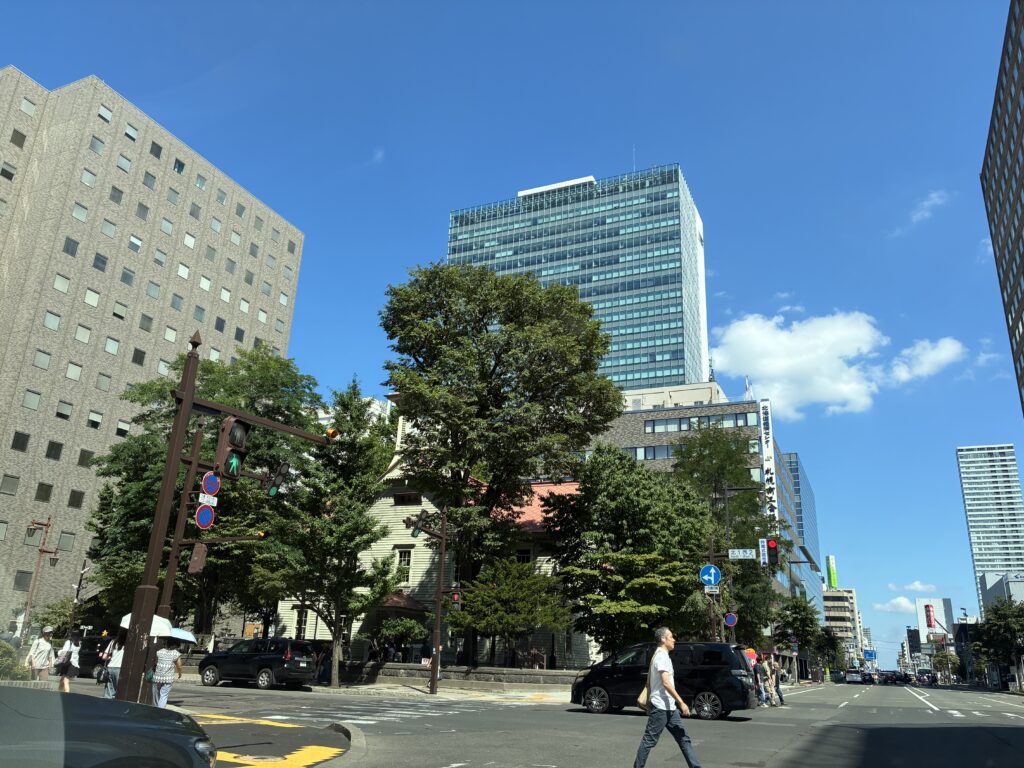
That little white building buried among the trees is the Clock Tower. Seriously.
People react with, “Wait, it is that small?” or “Come on, enough with the bad joke. Show me the real one!” The gap between expectation and reality is the whole issue. Put the same building in the middle of a wide meadow and everyone would probably whisper, “So beautiful…” The Clock Tower is not the problem. The buildings around it are just too damn big.
If you only want to see the exterior and take a photo, 10 to 20 minutes is plenty. Go inside if you are interested in the history. You will probably enjoy it more as a quick stop along the way than as the grand centerpiece of your day.
Late Morning: Odori Park
Continue on foot to Odori Park. This is not a place you need to “conquer” like a major attraction. Look at the TV Tower, take in the city, buy a drink, and sit for a while if the weather is nice. That is the best way to use it.
Odori Park also hosts seasonal events such as the Sapporo Snow Festival and the YOSAKOI Soran Festival, so the atmosphere changes completely depending on when you visit. In summer, you may spot the grilled-corn wagons. They are an Odori Park tradition, so try one if your stomach still has space.
Lunch: Nijo Market
Walk from Odori to Nijo Market. It is easy to reach from the center, and it combines a market atmosphere with a convenient lunch stop. On a first trip to Sapporo, it is worth a look – and if the atmosphere appeals to you, have lunch there too.
I do not visit Nijo Market very often because it is so heavily geared toward tourists. But that also means the shops are used to international visitors, and the location is excellent. It is a perfectly reasonable option for your trip.
Afternoon: Tanukikoji Shopping Street
After lunch, head to Tanukikoji Shopping Street. Shops line roughly 900 meters of covered arcade, and that roof is a lifesaver when it rains or snows.
I see Tanukikoji less as a one-and-done tourist sight and more as a useful base during your trip. Souvenirs, drugstores, ramen, cafes, everyday supplies – when you need something, head toward Tanukikoji and you will probably find it.
One place I especially want you to visit is Don Quijote. The store is not neat and orderly; it is a maze. But that is exactly what makes it feel like a treasure hunt, where you suddenly stumble across something and think, “This is perfect.” It is also a very real slice of Japanese shopping culture. If you have time, enjoy detours like this that never appeared on your itinerary.
Evening: Susukino and Sapporo Food
From late afternoon onward, head to Susukino. Sightseeing time is over; now it is your stomach’s turn. For a first visit, consider jingisukan, miso ramen, soup curry, sushi, or an izakaya.
If you still have energy after dinner, ride Noria, the rooftop Ferris wheel at Norbesa. One circuit takes about 10 minutes and gives you a view of the city lights directly above Susukino. It is not a sweeping panorama like Mt. Moiwa; it is a night view from the middle of the action. Its greatest advantage is how easy it is to reach.
Just so you know, it feels pretty couple-heavy up there. Actually, it is basically all couples.
Day 2: See Sapporo’s Nature and Local Side
On Day 2, head toward Maruyama. The mood changes completely from the buildings, shops, and nightlife of the previous day. This is the day when you can clearly see that Sapporo is more than a city.
Morning: Maruyama Park and Hokkaido Shrine
Start with Maruyama Park and Hokkaido Shrine. They are next to each other, so think of them as one walk rather than two separate attractions. Maruyama Zoo is nearby as well, and you can add it depending on how you want to use the day.
You walk through the trees on the way to the shrine, and the atmosphere feels very different from the area around Sapporo Station. The park is especially popular during cherry blossom season in spring. Maruyama is also one of Sapporo’s more upscale residential neighborhoods, with pleasant streets that gradually give way to the greenery of the park and shrine grounds.
You can reach Hokkaido Shrine by bus or taxi, but I recommend taking the subway to Maruyama Koen Station and walking through the park. It takes around 15 to 20 minutes and makes a refreshing start to the day. The way there is slightly uphill, so it takes a little energy, but the walk lets you enjoy the nature around the shrine.
Local Ren Tip: You can hike Mt. Maruyama too. But you do not have to do everything just because you came all the way from overseas. Hike if you want to hike. If not, enjoy the park and shrine. Travel is not a game where you need a 100% completion rate. The trick is to prioritize satisfaction over trophies.
Lunch: Try Soup Curry
For lunch, consider Sapporo’s famous soup curry. The city has plenty of specialist restaurants, so you do not have to treat one famous shop as the only possible choice. On a three-day trip, an hour spent in line could be enough time to eat somewhere else and have coffee afterward.
You can look around Maruyama or Nishi 18-chome, or eat on the way back toward the city center. I am working on my own guide to Sapporo’s soup curry restaurants now.
Afternoon: Do Not Fill Every Minute
Leave some open time in the afternoon. Stop at a cafe. Walk around Maruyama a little longer. Visit Maruyama Zoo. Go back to your hotel and rest. Any of those is fine, because the main event today is Mt. Moiwa.
If you want to explore more around Maruyama Koen Station, use Maruyama Class as your base. There is also an excellent soft-serve shop nearby.

My recommendation is Maruyama Milk Store. I really want you to try the soft serve here.

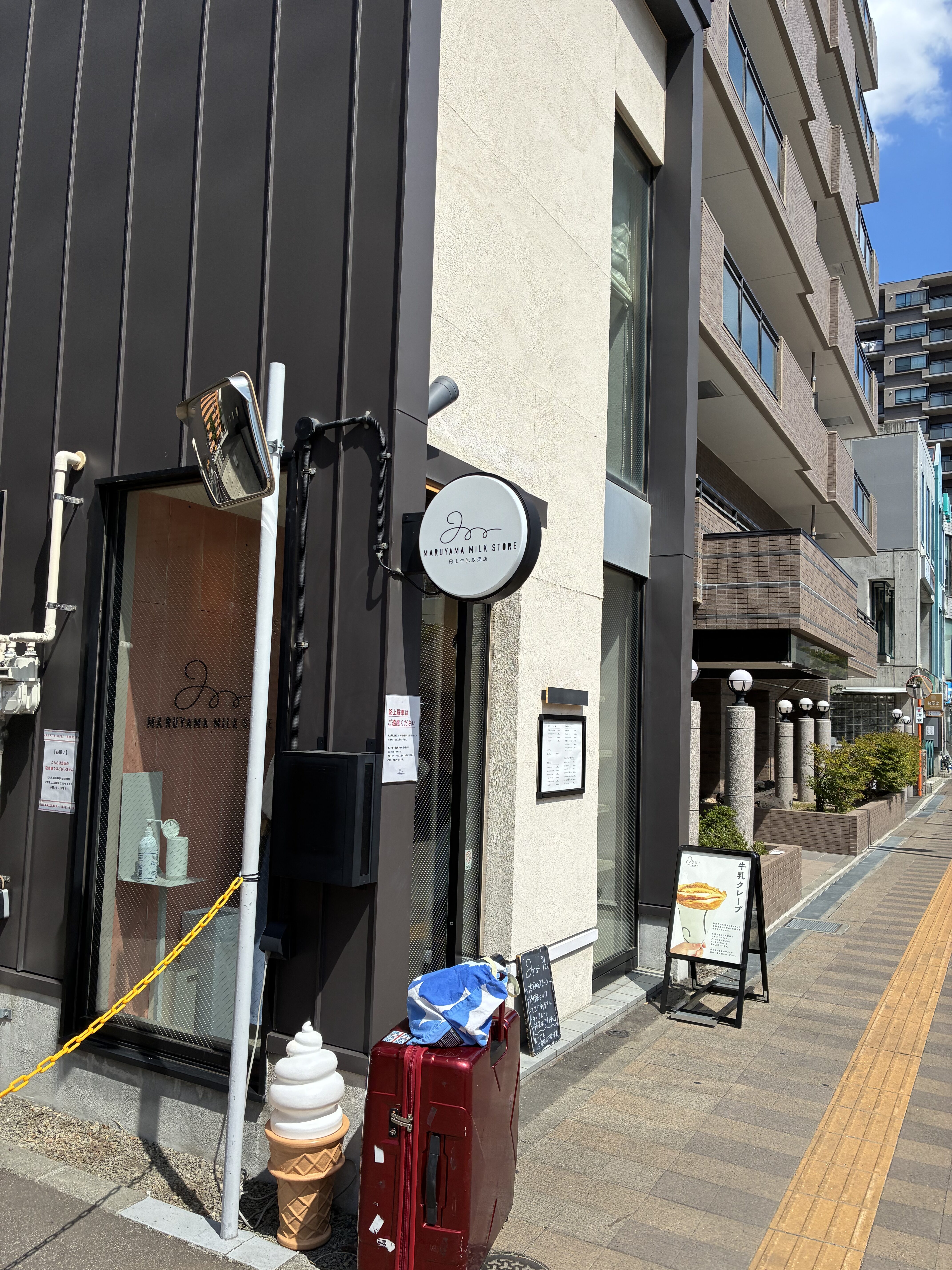
The menu has both gyuunyu soft cream and milk soft cream. Personally, I would choose the gyuunyu version. Rich soft serve is easy to find elsewhere, but this shop’s clean, refreshing texture is distinctive – it almost feels like eating fresh milk. You can order it in a cup or cone, so say which one you want.
The menu does not seem to have much foreign-language support. If you are ordering one, say hitotsu; for two, say futatsu. Then choose cup or cone.
“Gyuunyu(milk) soft cream hitotsu, cup (cone) de.”
That will get the idea across. Do not be nervous. You, smoothly ordering in Japanese while traveling abroad? You will look pretty damn cool.
Evening: Mt. Moiwa – Plan Around Sunset, Not the Clock
If the weather is good, head to the Mt. Moiwa Ropeway in the late afternoon. From Maruyama Koen Station, the JR Hokkaido Bus Ropeway Line (Loop Maru 11) takes about 15 minutes to the “Moiwayama Ropeway” stop. If you have been exploring around Maruyama Koen Station, the connection is very convenient. Check the official access information again on the day you go.
The important thing is not to say, “It is 5:00 p.m., so now we go to Mt. Moiwa.” Work backward from sunset instead. Summer and winter sunset times are completely different. Aim to arrive around 30 to 60 minutes before sunset, so you can watch the bright city slowly turn into a night view.
From the base station, take the ropeway and then the mini cable car to the summit. It takes more effort than the Ferris wheel downtown, but a night view from the mountain has a completely different character.
Local Ren Tip: Is Day 1 perfectly clear while Day 2 has rain in the forecast? Then go on Day 1. When your itinerary and the weather forecast disagree, follow the weather. There is no reason to climb Mt. Moiwa just because it is “on the schedule” if fog and clouds will hide everything. What are you even going up there for? If the night view is the point, check the operating status and live camera on the official website.
Day 3: Choose Your Sapporo
Do not lock Day 3 into one fixed route. Choose from the options below.
By now, you will have seen the city center, Maruyama, and Mt. Moiwa. For your last day, prioritize what you actually wanted from Hokkaido: food, beer, nature, or hot springs.
Option A: Food and Beer
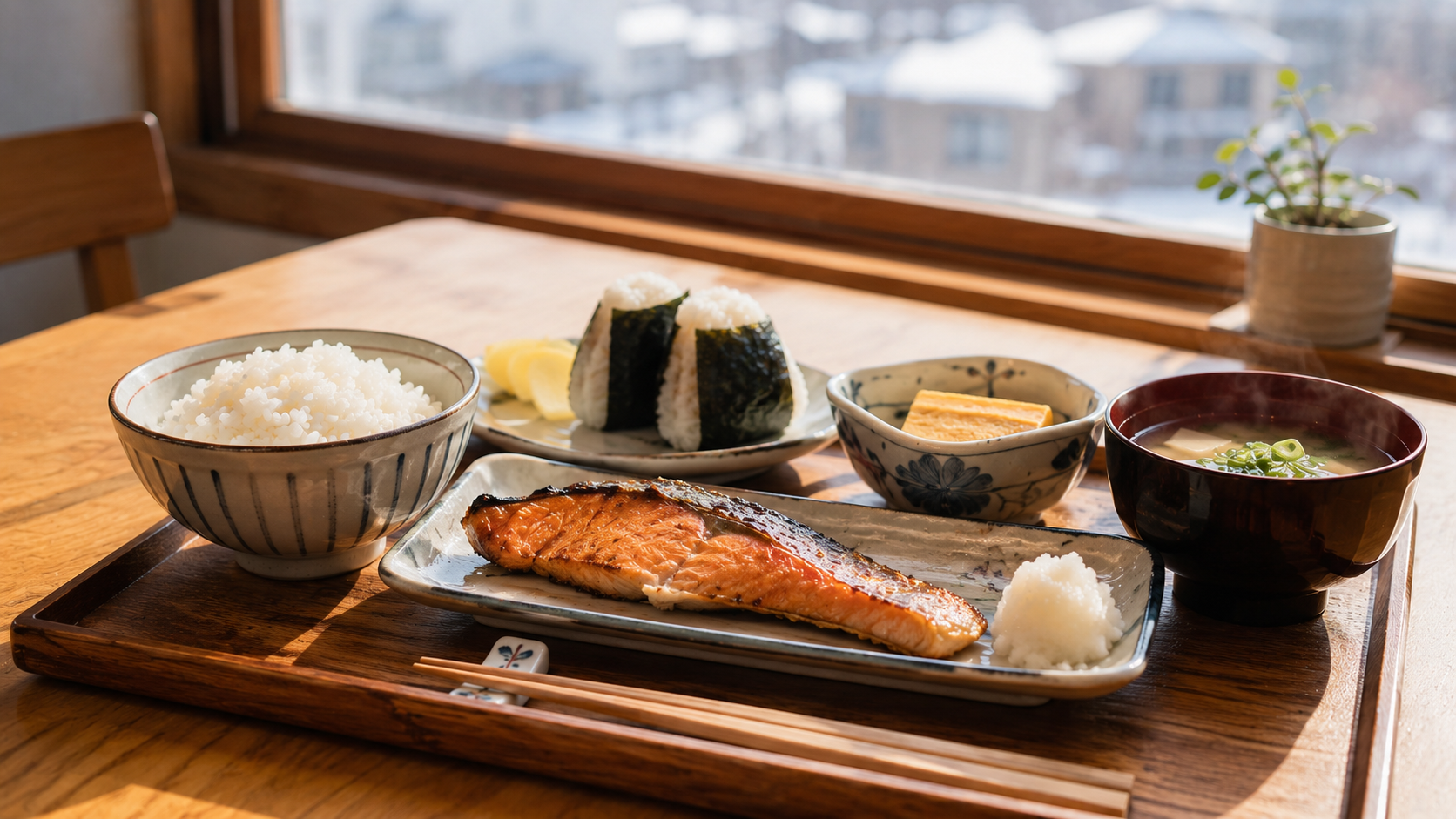
If food is a major reason for your trip, the best choice may be to take it slow in the city. For breakfast, choose seafood, a Japanese set meal, onigiri, or Seicomart. I have collected more ideas in my Best Breakfast in Sapporo guide.
Have ramen for lunch, then visit the Sapporo Beer Museum in the afternoon and finish with sushi or an izakaya at night. Do not feel guilty because you “did not go anywhere far on Day 3.” If you came to Hokkaido to eat, make this the day you do it properly. Food is one of Sapporo’s greatest attractions.
Sapporo Factory is another good option. You can shop, eat, and enjoy the open atmosphere of its large atrium.
Option B: Nature and Art – Choose One Area
If you like nature or art, head to the outskirts. But there is one important catch. Central Sapporo is compact and easy to explore; the outlying areas are not close to one another. Choose one part of the city rather than trying to connect everything.
For the east side, consider Moerenuma Park together with Sapporo Satoland.
If art is your priority, head south to Sapporo Art Park. Take the subway from Sapporo Station to Makomanai, then ride a bus for about 15 minutes.
Another classic Sapporo stop is Hitsujigaoka Observation Hill. It has a statue of William Smith Clark, whose phrase “Boys, be ambitious” is known and loved by basically every Sapporo resident. True to the name Hitsujigaoka, there are sheep here, and you can also eat jingisukan.
Hey, relax. Ordering jingisukan does not mean one of the sheep in front of you is about to disappear… probably.
Local Ren Tip: It is dangerous to assume that you can see everything just because it is all technically inside Sapporo. Outside the center, this city is huge. Plan the outskirts with a downtown sense of distance, and your whole day can vanish into subway and bus transfers.
Option C: Give Most of Day 3 to Jozankei – or Stay Overnight
If you came all the way to Hokkaido and want an onsen experience, consider Jozankei. A direct bus from Sapporo Station takes about 60 minutes; a regular local bus takes around 80. In other words, this is not a neighborhood hot spring you casually pop into and leave.
For a day trip, plan to give Jozankei most of Day 3. You could sightsee in Sapporo in the morning, spend only the afternoon in Jozankei, then rush back in the evening. It is not impossible. I just would not do it. You came for a hot spring – do you not want time to relax?
If slowing down at an onsen is one of your priorities, stay overnight from Day 2. In that case, reshape this itinerary into two days in Sapporo plus one night in Jozankei.
What About a Day Trip to Otaru?
People often ask, “If I have three days, should I go to Otaru too?” If Otaru genuinely interests you, then of course the answer is yes. If the canal, old port-town streets, glassware, and sweets appeal to you, replacing Day 3 with Otaru is a good choice.
Day 1: Central Sapporo -> Day 2: Maruyama and Mt. Moiwa -> Day 3: Otaru
Otaru is easy to reach from Sapporo by JR, and it fits comfortably into this itinerary. On the other hand, if your only reason is, “Well, I came to Hokkaido, so I guess I should add Otaru,” there is no need to force it. You can easily fill three days in Sapporo alone.
Local Ren Tip: Cities in Hokkaido can look surprisingly close together on a map. That impression is, unfortunately, an illusion. Once you start moving, the distances are very real. Otaru is one of the few places that genuinely is easy to reach from Sapporo.
For example, if you want to visit Furano as a day trip, set aside the full day. If you try to visit Furano and Noboribetsu in the same day, the schedule becomes brutally tight – less like a vacation and more like endurance training.
Where Should You Stay for a 3-Day Sapporo Trip?
For a three-day trip, location matters more than luxury. First-time visitors are unlikely to go badly wrong in any of these three areas: Sapporo Station, Odori, or Susukino.
Sapporo Station
Best for travelers who want the simplest trip from the airport. It is also convenient if you plan to use JR for Otaru or other destinations, and it saves you from dragging a large suitcase through multiple subway transfers on arrival.
Odori
Odori sits between Sapporo Station and Susukino. It offers a good balance of sightseeing, food, and transportation, and it is probably my easiest recommendation for a first visit. Both Tanukikoji and Susukino are within comfortable walking distance.
Susukino
Choose Susukino if dinner and nightlife matter most. After jingisukan, ramen, or an izakaya, you can decide you are completely done with public transport and simply walk back to your hotel. It is especially convenient for night owls who want to keep exploring after dinner.
Getting Around Sapporo
For this three-day itinerary, the subway and walking will cover most of your needs. Add the streetcar or buses when necessary.
As I have mentioned elsewhere on this site, Sapporo’s municipal subway accepts contactless payments by credit card and other supported devices. There is little reason to rent a car just for the city center. If you are not used to snowy roads, my local advice is not to force yourself to drive in winter. Even I get nervous during heavy snow or on icy roads. Honestly, I would rather not drive at all on those days. I understand the instinct to rent a car because you are in Hokkaido, but in central Sapporo it can create more trouble than it saves once you factor in snow and the search for parking.
My 3-Day Sapporo Itinerary at a Glance
| Time | Day 1 | Day 2 | Day 3 |
|---|---|---|---|
| Morning | Clock Tower -> Odori | Maruyama Park -> Hokkaido Shrine | Choose by interest |
| Lunch | Nijo Market or elsewhere downtown | Soup curry | Ramen, seafood, or another favorite |
| Afternoon | Tanukikoji and city walk | Cafe and rest | Beer / nature / Jozankei |
| Evening | Dinner in Susukino | Mt. Moiwa around sunset | One last Sapporo meal |
A Few Local Tips Before You Go
As someone who lives in Sapporo, the main thing I want to tell international visitors is not to overfill the schedule. I am not saying that because I want to make this article shorter. I am saying it because Sapporo gives you almost too many ways to spend your time.
The best part of international travel is not only seeing famous landmarks.
Walk through a park. Browse a supermarket. Buy a Hot Chef snack at Seicomart. Wander into the underground shopping streets. Step into a place that catches your eye. These unscheduled moments often stay with you because they show you something of everyday Sapporo culture.
The experience also changes greatly with the season: cherry blossoms in spring, parks and events in summer, autumn leaves in fall, and snow in winter. In winter especially, do not trust a bus timetable too blindly. Bad weather can also make taxis difficult to find, because when you want one, everyone else has had exactly the same idea.
Local Ren Tip: If the weather is clear, go to Mt. Moiwa. If it rains, use Tanukikoji or the underground streets. If you are tired, stop at a cafe. If the snow gets heavy, cut one long-distance trip. That is fine. A travel plan is only a plan; it is not your master.
Final Thoughts: Is Sapporo Worth 3 Days?
Yes. For a first visit, three days in Sapporo is a very good amount of time.
One day lets you see central Sapporo. Two days gets you to the major sights. With three, you can add the nature, food, and everyday local life that suit your interests. Jozankei or Otaru can also work well.
Sapporo is not a city where you race from one world-famous mega-attraction to the next. Its appeal is the combination: a real city with nature close by, an enormous range of food, and a completely different character in every season. That is what makes Sapporo worth visiting.
Use these three days as a base and build your own Sapporo trip around them. As Local Ren, I would be happier to see you do that – and I think you will have more fun too.
コメント